Friday, April 9, 2010

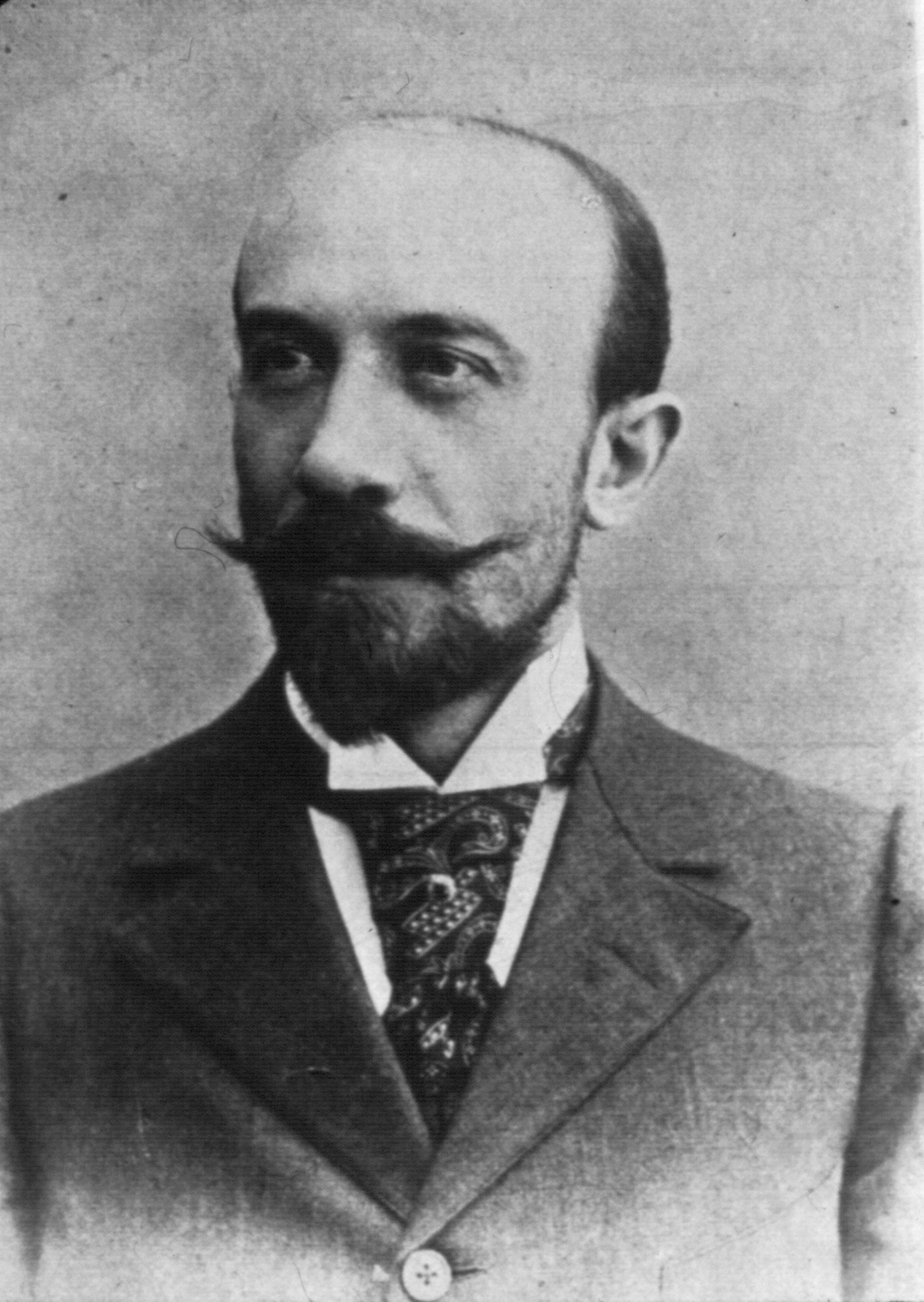
Georges Méliès

From American filmmaking, we now move back to the French; in this case, the specific Frenchman we are referring to, though an amazing innovator, was also robbed by Thomas Edison and company: The man is Georges Méliès.

Originally trained as a stage magician, Méliès became entranced by filmmaking after seeing a cinema demonstration in 1895. For the rest of the decade, Méliès and his assembled theatre company pushed the boundaries of how one could use film, creating such techniques as the multiple exposure and the stop trick; here are some of his best short films:


Of course, Méliès's most famous film was A Trip to the Moon, released in 1902:


Unfortunately for Méliès, who had intended to release the film in the United States to profit from it, certain film technicians hired by one Thomas Edison secretly made copies of it and distributed it throughout the country; though the film was still hugely successful, Méliès did not make a dime off of it, and thanks to Edison's unscrupulous techniques, the poor filmmaker eventually went bankrupt.

After his brilliant career, Méliès became a toy salesman in a train station in France; it would be two decades before his innovations were to be appreciated for what they were.

Despite his poor lot in life, Méliès was a true pioneer of cinema, being one of the first filmmakers to deal largely in special effects wizardry and, well, just plain fun.

The Dickson Experiment

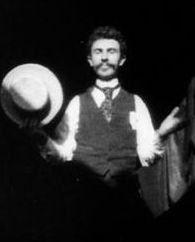
During the rest of the 1890s, Thomas Edison worked on various other related projects, mostly through the help of his underpaid assistants; the most important of these to realizing Edison's bought-off patents was William Kennedy Dickson.

Dickson, a French-born expatriate of Scottish descent, directed and starred in Edison's first publicly-shown film, released in 1891:


By 1893, Dickson had created many more films for Edison, including the momentous Dickson Experimental Sound Film; in it, he played the violin (though not entirely in tune) as Edison barked orders out of sight, shortly before filming began:


Frankly, the only reason I'm including Dickson in this series of posts is because of what he did after his career with Edison; in 1895, he founded the American Mutoscope and Biograph Company, which, just three years later, sued Edison for his claim of having invented the motion picture camera. As key witnesses, Mutoscope called Adolphe Le Prince, Louis Le Prince's son, to testify that his father had patented his device before Edison.

Though the case eventually went against Mutoscope, I still give Dickson the benefit of the doubt for attempting to publicize Le Prince's achievements, and for that, he earns a post on my blog for having gone against his horrible boss.

The Copyright Vandals

After Louis Le Prince's mysterious disappearance, dozens of imitators sprang up to take advantage of the missing inventor's machine; the most notorious of these was Thomas Edison.

Yes, that Thomas Edison; despite his reputation as the "Wizard of Menlo Park", Edison's main path to inventing was by stealing patents, or generally copying the ideas of more skilled inventors and taking credit for them (the lightbulb, the phonograph, and various electric technologies were all the product of this). He was a ruthless businessman, and one of the first things he did with his lesser copy of Le Prince's technology was crank out crap with it.

You have seen Le Prince's films, and how (despite their briefness) how clear they are, and how the eye can perceive every detail, frame by frame; you will now see Edison's first attempt, made just two years later, entitled Monkeyshines:


Bit of a misleading title, no? Not only is there nothing exciting about the footage, but the first clip is nearly impossible to make out!

We will soon see Edison's next venture into film, but, for now, let's say that his first attempt did not score well.

Wednesday, April 7, 2010

Louis Le Prince

For this, my second post in a single day (!), I would like to shift gears slightly, from older music media to older film; in particular, let's look at the true (and forgotten) father of film, a man most of you have probably never heard of: Louis Le Prince.

A French inventor, Le Prince spent most of his life working in England, studying photography; he became interested in the art of "moving" photography later in life, spending years toiling over a way to somehow capture life. His first camera had sixteen lenses, which he used several times while in the United States in the mid-1880s, but upon his return to England, he had created (and patented) a camera with a single lens that could successfully film from life: His MkII Camera.

With it, he filmed some of the world's oldest surviving films, but, before he could promote his camera in America, he mysteriously disappeared after boarding a train to Paris on September 16th, 1890; his body was never found, and his pioneering work soon fell into obscurity.

In this day and age, however, Le Prince's work has been rediscovered, and, indeed, celebrated for its ingenuity as the foundation for the motion pictures we see today.

Without further ado, then, I would like to present to you the filmic legacy of Louis Le Prince; they may not be much, but they are precious treasures of world history:


Enjoy them, but try to enjoy them for what they represent, not what they are.

George Formby, Sr.

Today, I'd like to talk to you about a performing artist most of you have never heard of: George Formby.

The name might seem familiar to some, but that's only through the films of the ukelele-playing George Formby, Jr.; one of his most famous songs is presented below:


This is, however, not the George Formby we're going to talk about today; instead, you'll be learning about his father, one George Formby, Sr... and, in my opinion, he was even better than his son!

"How?", you might ask? I'll let Wikipedia tell you:

Formby was one of the first people to be invited to make recordings, the first in 1906. He went on to make around 180 records, which was relatively prolific for that period. The Times commented, "There cannot be many people who have not heard at some time in their lives either the words or the refrain of 'John Willie – Come On', 'One of the Boys', 'I was Standing on the Corner of the Street', or 'Playing the Game in the West'." Formby was one of the few performers who had no problems in the business of recording, performing in a relaxed fashion for an invisible audience. He would sing his song, and then go on to talk to the listener, saying things like "Y'know, that fella be'ind that's, err, recordin' this now, y'know they call 'im Syncopation George. I think it's ragtime, I don't know what to call 'im, I think I'll call 'im a parasite! Oh, no... come on, say that's an insect, I don't know but I'll enquire it about it". The only film in which Formby is known to have appeared in was No Fool Like An Old Fool (1914), in which he played John Willie. No copies of the film are known to survive.

Now, without further ado, I give you the lively musical stylings of George Formby, Sr., circa 1915, with "All of a Sudden It Struck Me":


Enjoy!

Thursday, April 1, 2010

Google Sites (and my frustration with it!)


Today, I visited Google Sites, a sister site to the Google web engine, in order to better know this web authoring tool; it helps users create their own sites, then hosts them (via, of course, Google).

I decided to try it out, as per the assigned procedure. I went through the process of picking out templates, the site name, etc., but, when I finally reached the end of the page, I hit a snag; no matter how many times I typed in the letters to the CAPTCHA (that is, those random letters that registration sites make soon-to-be users type in to identify whether or not they are actual human beings), the damned thing would not let me create a site! I am sure that I typed all the letters in correctly, every time, but still it would not let me through; this is a major concern for any possible users who would want to use Google Sites.

In short, despite my technological proficiency, and eagerness to try the site out, I could not, for all my attempts, get in.

EDIT: Upon further review, it appears that the site name I registered, Test Site, had already been used, as had variations upon my own name; as a final resort, I tried it with my first, middle, and last names, and finally managed to create my own test site.

Friday, March 19, 2010

Palmquist

Today, I am doing a brief response on an article by Palmquist; he stresses, as his key ideas, the importance of organization on websites and that consistent, simple layouts are the best to use for websites.

As a response, I have posted two links to two separate websites; the first is a link to the online magazine Slate, which is very well organized and has a consistent, defined layout in the form of an article bar, sections, and separate use of colors; the other link is to the self-proclaimed World's Worst Website, which uses its horrendous layout as a means to teach prospective site managers what not to do when designing a website.

Here they are, below; look at the second one at your peril:

http://www.slate.com/

http://www.angelfire.com/super/badwebs/

I know this doesn't have much to do with older media, but it provides a good contrast, doesn't it?